
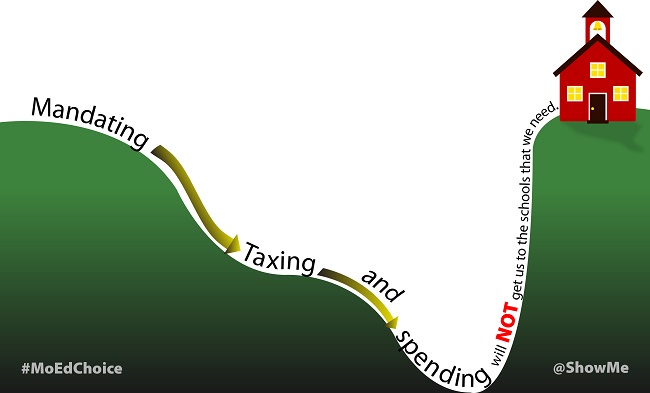
In Wednesday night’s State of the State address, Gov. Jay Nixon doubled down on the same education initiatives that have gotten us nowhere—increased funding, mandated standards, accountability tests, strong tenure laws, smaller class sizes, increased teacher salaries. This has been the strategy for the past 20 years, and it hasn’t worked.
Since 1992, per-pupil spending in Missouri has increased nearly 40 percent in inflation-adjusted dollars. Missouri has had state-imposed learning standards since 1993. We’ve participated in No Child Left Behind mandated testing for more than a decade. Teachers are given an indefinite contract after five years, making it difficult to remove even an ineffective teacher. In 2014, there were approximately 13 students to every one teacher. The average teacher’s salary is nearing $50,000, with a 14.5 percent match on retirement contributions and benefits that far surpass private-sector counterparts.
More of the same is not going to propel Missouri forward.
Allowing charter schools to enroll students across district boundaries, creating opportunity scholarships, reducing mandates—these are the types of policies that will create an ever-improving educational market. These are the types of changes we need.
If we truly believe that “education is the key to the economic future of our state,” as the governor suggested, then we need to re-think our policies and re-imagine what it means to have a quality public education system. Mandating, taxing, and spending will not get us to the schools that we need. We need policies that enable school leaders to be change agents who empower parents with educational options.