

Steve Vockrodt over at The Pitch has an excellent column about how taxpayer subsidized development projects often underperform their goals. He writes in part:
Developers often win over politicians and the public by promising that TIF will help "create" a certain number of new jobs. But those projects often miss the mark, and at times by a wide margin.
Last month, the Missouri Department of Revenue released its annual report for all TIF projects in Missouri. The numbers were stark.
Among the 504 TIF districts across the state, developers estimated that 266,261 new jobs would be created. In fact, 89,485 were realized. That's 33 percent of the projection.
The annual report that Steve cites is here. Pages 258 and 259 show that now that the Power & Light District’s KC Live project is completed, only 1,003 of the projected 2,034 jobs have been realized. The reality, however, could be much worse than that.
Using data provided by Kansas City's Regulated Industries Division, we sought to see if there was any citywide increase in either liquor licenses issued to businesses or the liquor cards issued to individuals who work in bars and restaurants. The chart below shows that since the Power & Light District opened in 2008, these numbers have been flat.
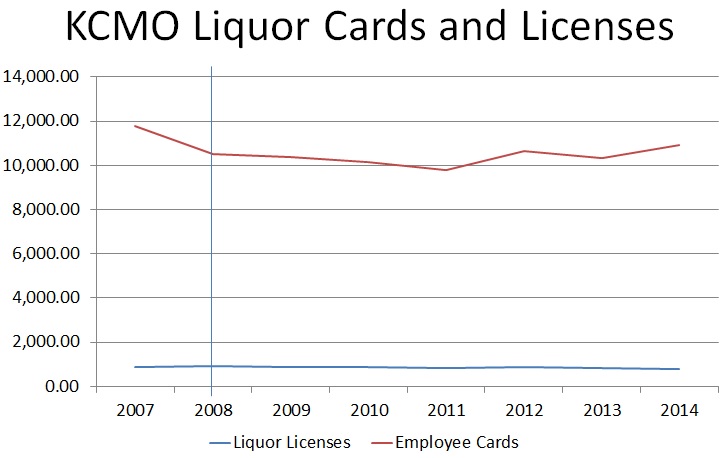
If KC Live created jobs as the TIF report suggests, yet citywide employee liquor cards remained flat, it means that the TIF didn’t so much create jobs as just move them from elsewhere in the city such as Westport or just outside the TIF area.
Yet the financial costs to the city and other taxing jurisdictions for this storefront shuffling are very real. In addition to the cost of foregone tax revenue, the city must pay about $15 million each year to cover the underperforming investment through 2040.
The question that responsible policymakers must consider is not merely how to move jobs and residents downtown, but at what cost? The city has shown that it can drive property development downtown by paying for it. That's hardly impressive. But it cannot show that there is any real net economic benefit citywide. Without that, we're just throwing good money after bad.




