

The GO Bonds Will Cost You Much More Than You’re Being Told

State and Local Government |
By Patrick Tuohey | Read Time 2 minutes minutes

March 6, 2017: update

Everyone paying attention to Kansas City politics knows that we’re facing an $800 million bond vote on April 4. Previous blog posts here have made the case that the city’s representation of it as a 20-year bond is inaccurate. Now let’s consider the costs.

Anyone who has borrowed money understands that there is a cost to doing so—interest. This additional cost is a consideration in deciding whether to borrow in the first place.  So how much will it cost Kansas City taxpayers to borrow $800 million over 40 years? According to the city’s Finance Department, when the debt is finally settled in FY2055, taxpayers will have paid out over $1.28 billion. The city’s own spreadsheet is available at the link below.

Kansas City’s own website also offers the following infographic, in which the “average annual” cost to someone who owns a $100,000 house is only $6. 
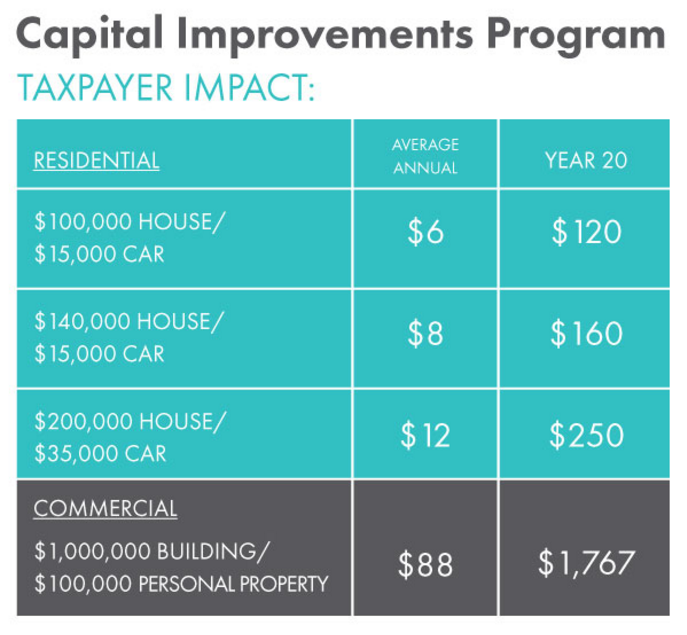
That seems like a bargain! However, the graphic is incomplete as it only represents the cost of a single 20-year, $40 million bond. The April 4 election would approve 20 such bonds, issued each year until FY 2036. Start stacking these per-bond costs and you’ll get an idea of the cost to taxpayers. After the last 20-year bond is retired in FY2056, the total amount of taxes paid would be $2,400, not $120.

The city’s infographic is telling 5 percent of the story. The timeframe of the debt is 20 times longer than what the graphic shows, and the cost to taxpayers is 20 times greater. Voters need to know this before being asked to hand over more than a billion dollars.


About the Author

Patrick Tuohey is a senior fellow at the Show-Me Institute and co-founder and policy director of the Better Cities Project. Both organizations aim to deliver the best in public policy research from around the country to local leaders, communities and voters. He works to foster understanding of the consequences — often unintended — of policies regarding economic development, taxation, education, policing, and transportation. In 2021, Patrick served as a fellow of the Robert J. Dole Institute of Politics at the University of Kansas. He is currently a visiting fellow at the Yorktown Foundation for Public Policy in Virginia and also a regular opinion columnist for The Kansas City Star. Previously, Patrick served as the director of municipal policy at the Show-Me Institute. Patrick’s essays have been published widely in print and online including in newspapers around the country, The Hill, and Reason Magazine. His essays on economic development, education, and policing have been published in the three most recent editions of the Greater Kansas City Urban League’s “State of Black Kansas City.” Patrick’s work on the intersection of those topics spurred parents and activists to oppose economic development incentive projects where they are not needed and was a contributing factor in the KCPT documentary, “Our Divided City” about crime, urban blight, and public policy in Kansas City. Patrick received a bachelor’s degree from Boston College in 1993.

Similar Stories

Support Us

Headline to go here about the good with supporting us.

Donate
Man on Horse Charging


