
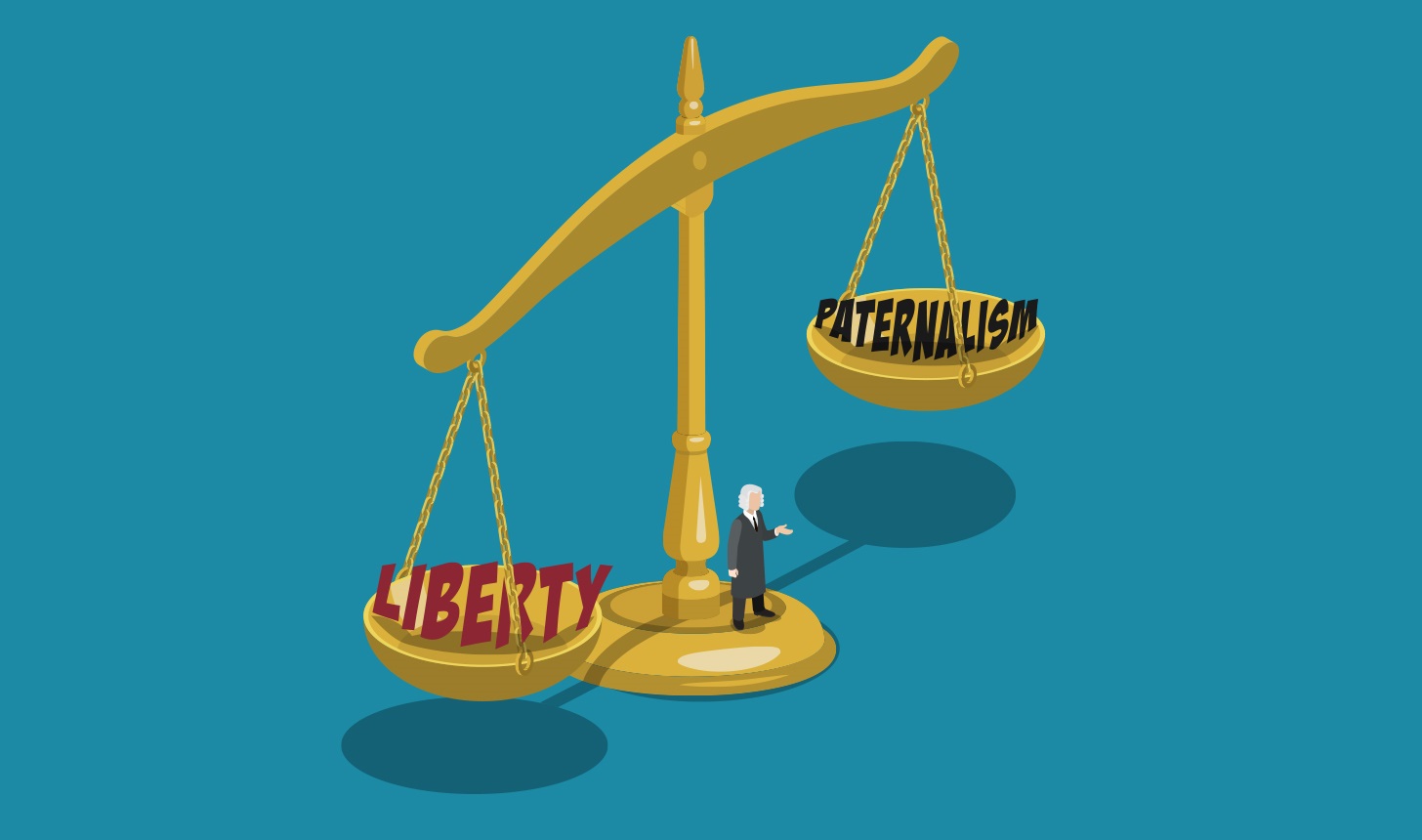
When it comes to state-level policy, research suggests that Missouri respects the rights and responsibilities of the individual. That is according to a new publication from the Mercatus Center at George Mason University which ranks Missouri 45th in its degree of political paternalism.
The authors describe the will to paternalism as
the belief that if left to their own accord, individuals have biases or tendencies that may lead them to make bad decisions in the absence of a governmental “nudge.”
The manifestations of these policies are familiar to all of us—sin taxes such as those on alcohol or tobacco, subsidies for recycling, and mandates on automobile/health insurance or retirement savings are a few examples. While well intended, these policies substitute government bureaucrat decision-making for individual decision-making in an effort to protect us from ourselves. (A reasonable person may ask why the “individual biases and tendencies” of a state employee are superior to the “individual biases and tendencies” of anyone else.)
To arrive at their conclusions, authors Russell S. Sobel and Joshua C. Hall awarded scores to states for a variety of policies, including:
- Their reliance on selective sales taxes such as those placed on unhealthy foods and products.
- Their propensity for subsidizing good behavior such as recycling or using energy efficient appliances.
- Use of miscellaneous bans and regulations such as plastic bag bans, fireworks bans, or motorcycle helmet requirements.
When all states scores were tabulated, Missouri came out 6th least paternalist. That is good news. Kansas came out 4th and Illinois 44th. Perhaps not surprisingly, New York ranked the most paternalistic state and Wyoming the least.
This is not to say that the policies examined in the study are necessarily bad or undesirable, or that there aren’t other state regulations that significantly hamper innovation or create unnecessary burdens on business. Nor does it conclude anything about state spending. But Missouri’s rank suggests that relative to other states, Jefferson City is not inserting its own values into individual consumers’ transactions.




