
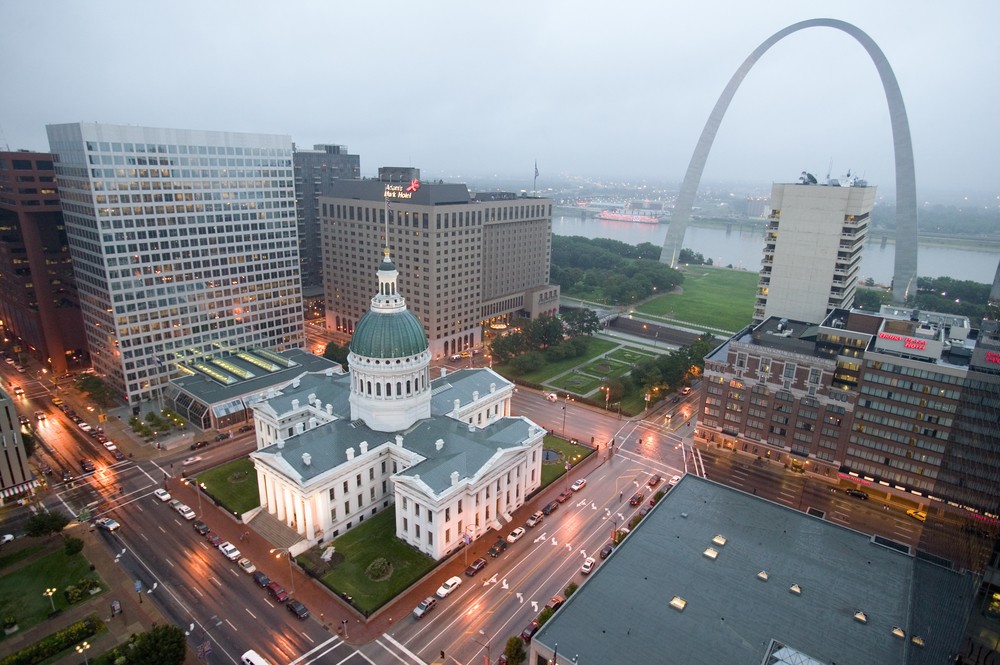
Greater St. Louis Inc. has just released the results of its year of discussions with community members about how to get the St. Louis region back on track. The STL 2030 Jobs Plan certainly has lofty goals. The authors claim to have created a road map to make St. Louis a nationally recognized leader in inclusive job growth through five definitive actions.
The problem is that the report quickly glosses past their acknowledgment of “decades of economic underperformance, population stagnation and racial division” to a future of growth and expansion in a mere nine years. And the path to achieving this miracle is less than clear. The report is peppered with buzz words, but short on detail.
As someone who spends time studying education policy and results across the state of Missouri, I’m very curious to know how this group plans to turn a school system in which just 18.5 percent of students score Proficient or above in math into a “talent engine.” The commission wants to ensure “that every student receives quality STEM education and exposure to various occupations beginning in pre-K and continuing through high school”? What does quality STEM education look like and who’s going to teach it? And don’t we have quite a long way to go there, given that the average high school ACT score is currently 16.6?
Action item number four is “Become a talent magnet and engine,” and that’s the only part of the plan that mentions education. “Successful” programs at local community colleges and universities are identified, but fewer than 60 percent of SLPS graduates enroll in college and the report acknowledges their dismal completion rates.
Not to be a wet blanket, but St. Louis is not going to be a talent engine or magnet until we figure out how to better educate the 82 percent of students who are not able to do math at grade level. All the jargon and buzzwords in the world won’t help a district with a mobility rate (a measure of how many kids joined or left a district in a given year) of over 46 percent. Turning this ship around will be difficult and will require big ideas and open-minded thinking.
St. Louis already has quite a few high-performing charter schools, but we could use more. There are existing charter school networks with proven track records of success in STEM education for disadvantaged students. The Denver School for Science and Technology (DSST) network, for example, serves nearly 7,000 students across nine middle schools and six high schools. Just 15 percent of DSST students are white and over 70 percent qualify for free or reduced-price lunch. But here are the numbers that matter: DSST has had 100 percent college acceptance for its high school seniors for the last twelve years in a row. Its average SAT score of 1092 is higher than the national average of 1059. And two-thirds of its graduates become first-generation college students.
DSST is just one example. Cities like Denver that encourage strong portfolios of education options for their students become growth engines. Families want to stay and raise their children in these cities. Putting STEM materials in front of students who are stuck in schools that can’t teach them math isn’t going to cut it. Every parent in the St. Louis region should have several publicly funded options for educating their children—traditional public schools, charter public schools, private schools, or homeschooling. A robust system of choice should be our goal, not waving a wand over the existing system and imagining it will simply transform itself.




