

We’re in the midst of an educational crisis. We’re halfway through a third disrupted school year and Missouri students, especially the most vulnerable, have fallen dangerously behind. While the Missouri Department of Elementary and Secondary Education (DESE) has cautioned against drawing conclusions from last year’s test scores, they can’t just be ignored.
It’s troubling enough that only about one third of the Missouri students who took the state assessment last year scored at grade level in math. But for certain categories—Black students and students with disabilities—roughly ninety percent did not hit that benchmark last year. When 75 percent of students in multiple subgroups are below grade level, it’s time for immediate and intensive interventions.
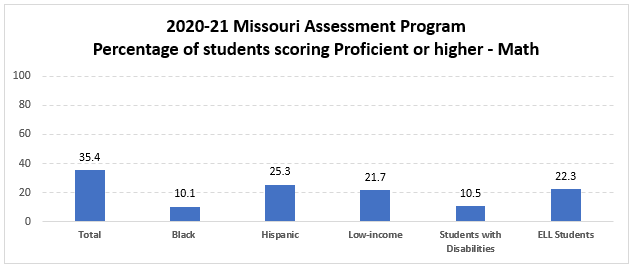
Parents are well aware of what’s going on and many are upset that their children are losing ground. A recent survey found that over half of parents think tutoring would be very helpful for their children this year. Nearly two thirds of parents of students with disabilities would like tutoring for their children. Parents who can afford it are seeking tutors and paying out of pocket for them. But what about the 80 percent of low-income students who are falling behind?
Tennessee just pledged $200 million of its federal stimulus funds to launch a three-year tutoring project called the Tennessee Accelerating Literacy and Learning Corp (TN ALL Corps). High-dosage/low-ratio tutoring has “consistently proven to accelerate achievement as quickly as possible” says Tennessee’s education commissioner. In fact, a study from Brown University found that regular, frequent tutoring sessions can increase learning by up to 10 months.
DESE also has nearly $200 million in funding from the American Rescue Plan, plus millions from earlier rounds of stimulus. So far, Missouri has pledged stimulus funds to teacher recruitment and retention, to the Missouri Leadership Development System for principals, to improving the longitudinal data system, and to teacher professional development. While these may be great ideas in the long run, they don’t address the immediate crisis. Missouri’s needs big, bold ideas from its leaders and it needs them now.




