A SCOTUS Victory for Private School Choice

State and Local Government |
By Susan Pendergrass | Read Time 2 minutes minutes

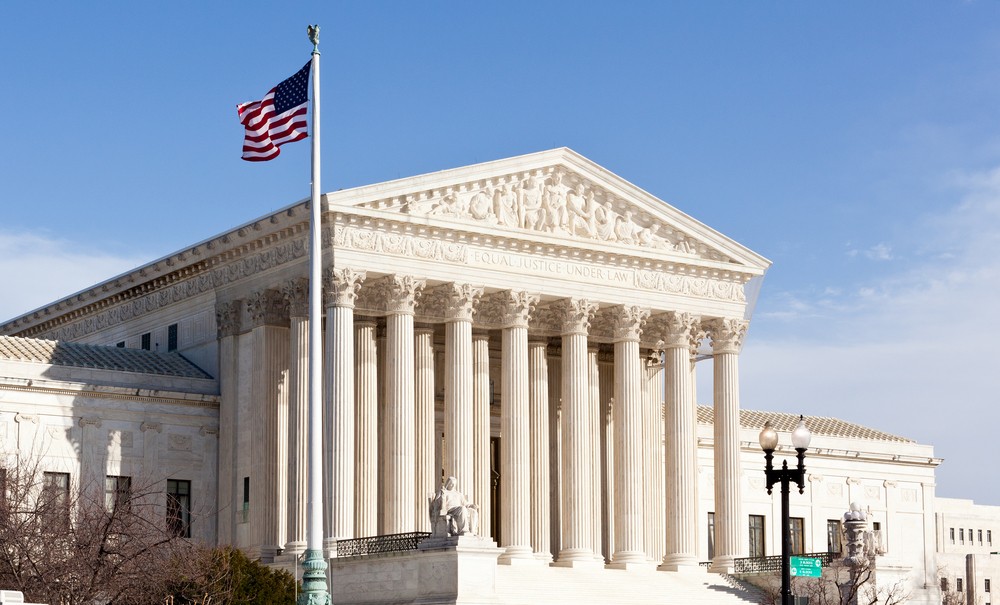
Once again, the Supreme Court of the United States has upheld a parent’s right to choose a religious private school, even if the tuition is being paid for with public dollars. The Carson v. Makin case arose from a town tuitioning program that has been in place in Maine since the 1800s. Town tuitioning allows small, rural towns that don’t have the resources to support their own high school to pay tuition for high school students to attend private schools. Maine parents had been able to choose a religious or a secular school until 1981, when choosing a religious school was banned.

Similarly to the Trinity Lutheran Church case in Missouri and the Espinoza case in Montana, the court held that allowing students to take their public dollars to a religious school of their choice does not establish an official state religion any more than using a Pell grant at a religious university does. The ruling does not require states to fund school choice. But, if they have a school choice program, they may not exclude religious schools from participating.

Beginning this fall, qualified Missouri families can apply for an Empowerment Scholarship Account (ESA) to be used to pay for, among other things, tuition at a private school. Five of the six approved Education Assistance Organizations (EAOs) that will be disbursing the scholarships are religious. The latest Supreme Court ruling should put to bed any questions as to whether anyone should take issue with that.

About the Author

Before joining the Show-Me Institute, Susan Pendergrass was Vice President of Research and Evaluation for the National Alliance for Public Charter Schools, where she oversaw data collection and analysis and carried out a rigorous research program. Susan earned a Bachelor of Science degree in Business, with a concentration in Finance, at the University of Colorado in 1983. She earned her Masters in Business Administration at George Washington University, with a concentration in Finance (1992) and a doctorate in public policy from George Mason University, with a concentration in social policy (2002). Susan began researching charter schools with her dissertation on the competitive effects of Massachusetts charter schools. Since then, she has conducted numerous studies on the fiscal impact of school choice legislation. Susan has also taught quantitative methods courses at the Paul H. Nitze School for Advanced International Studies, at Johns Hopkins University, and at the School of Public Policy at George Mason University. Prior to coming to the National Alliance, Susan was a senior policy advisor at the U.S. Department of Education during the Bush administration and a senior research scientist at the National Center for Education Statistics during the Obama administration.

Similar Stories

Support Us

Headline to go here about the good with supporting us.

Donate
Man on Horse Charging