
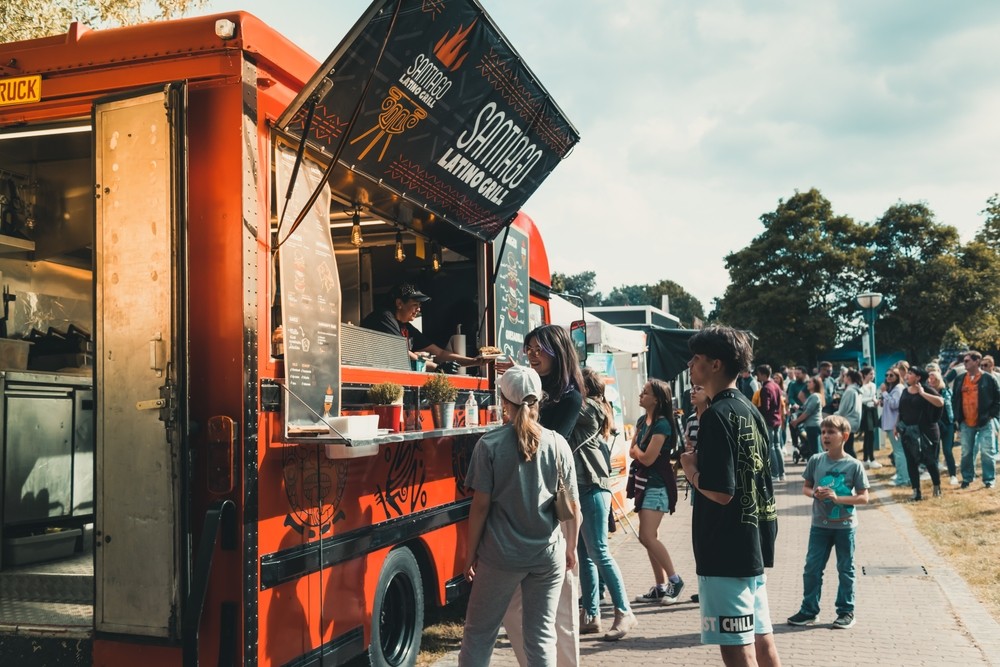
One of the staunchest opponents of limited government is often the government itself, in the form of the bureaucracy. Complicated codes and rules may be bad for society, but they are great for government workers. The City of St. Louis just held a hearing on food truck regulations, and members of the board of aldermen seemed genuinely surprised to hear how overly burdensome the rules are for food trucks in the city.
For example, why do all food truck employees have to wear an ID badge with a passport-quality photo on it? Restaurant employees don’t have to do that. That regulation seems insane, and at least some members of the board of aldermen appear to agree. As a Riverfront Times (RIP) reporter described it:
Committee members were shocked. When it was time for questions, Ward 8 Alderwoman Cara Spencer began with this: “My first question is, are you — and then there’s an expletive — kidding me.”
Show-Me Institute analysts have been writing about food regulation issues for years. In fact, we may have done more videos on food trucks than any other topic. It’s a great topic for us because it perfectly encapsulates how entrenched interests (in this case, restaurants) and their allies in government have worked together to stop a popular new way of doing business.
But back to the city. I think one of the reasons why the aldermen were so surprised by the level of red tape food trucks deal with is that they didn’t intend for it to be this difficult. But when you read the current legislation, one thing jumps out at you. The current ordinance governing food trucks gives the street director, the parks director, and the license collector authority to institute further rules they deem necessary. Here is one example from the ordinance (section 5.M):
The Director of Streets shall formulate any additional rules and regulations necessary for the proper administration of this chapter. Rules and regulations shall be maintained in the office of the Director of Streets and shall be available for public inspection during ordinary business hours.
This isn’t a hypothetical issue. The question of how legislators grant authority to regulators to set law is the subject of a major supreme court case right now. President Eisenhower stated that engineers went far beyond his original intentions with the Interstate Highway System by including intra-city highways without his knowledge, as just one example of this problem.
It may sometimes be necessary for elected officials to trust regulators to set rules under wide authority. However, there is serious risk to this approach. The idea that regulators are setting these rules fairly outside of their own system of pressure, bias or favoritism is hard to believe.
I hope the city will address the overregulation of food trucks with this excellent, newly proposed bill. After, all, it’s probably time for us to make another video . . .




