

The National Center for Education Statistics (NCES) performs an annual forecast of education data that includes enrollment projections of students by grade by state. According to a recent analysis by Chad Aldeman of the Georgetown Edunomics Lab, these projections have become less and less optimistic in recent years. Missouri, in which enrollment in public schools declined by 2.5 percent between 2017 and 2022, is expected to lose another 3.9 percent between 2022 and 2031. It seems that we hit an enrollment peak around 2013 at almost 920,000students before heading down to a projected 857,000 by 2031.
We can’t blame the COVID-19 pandemic for this outlook. These projections are based on a combination of factors, but the biggest driver of the downward trend is declining birth rates. Birthrates took a hit during the Great Recession in 2008 and have never recovered.
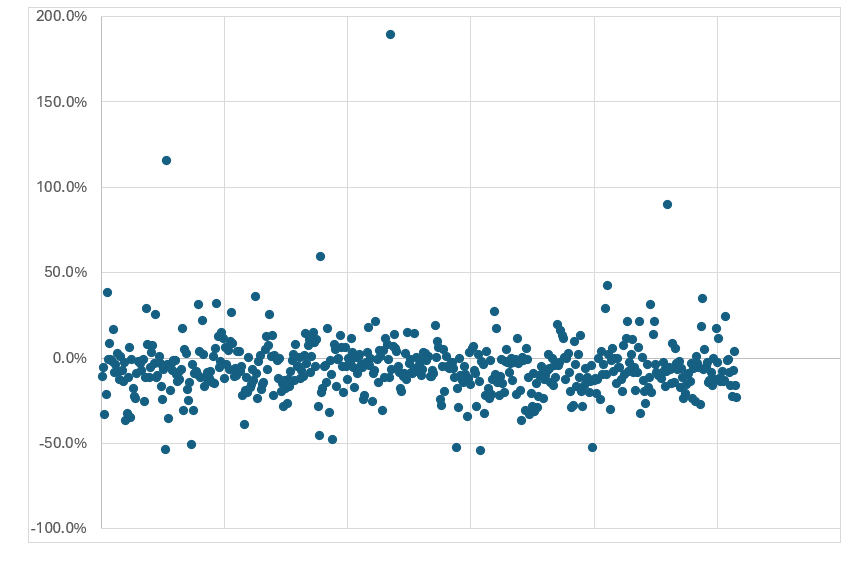
This graph shows the percent change in enrollment in public schools in Missouri between 2013 and 2023. Each dot is a school district. Some districts have made gains, but they are mostly small ones (with the exception of Grandview, which has increased enrollment in its virtual program). Most districts (366 out of 517) in the state are declining.
What this means is that we need to begin to reframe our thinking on public education spending. When we are serving fewer students, should we always expect to spend more? Is there a way to be smarter about what we spend and better target spending to the students with the most needs? Do we need to start having conversations about rigid teacher contracts and pension commitments? These are questions Missouri policymakers ought to be asking themselves.




