
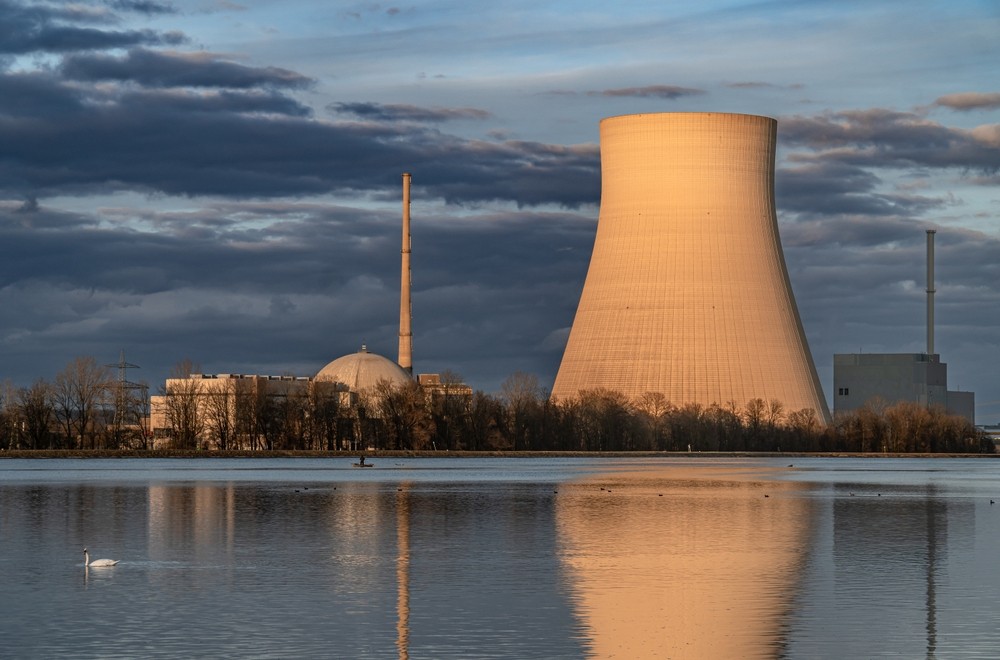
Did you know that the United States could be powered only by nuclear waste for 100 years? After fuel rods are spent in a reaction, only 4 percent of what is left over is genuine, nonreusable waste. These unusable byproducts are called “fission products.” The rest can be recycled to produce energy again.
In Missouri, the Callaway Plant has been operating reliably since 1984. With 40 years of operation, a decent bit of radioactive waste has accumulated. Could Missouri use nuclear recycling in the future to put that waste to use?
Oklo Inc. is a developer attempting to create a commercial-scale nuclear recycling facility. Recently, with Argonne and Idaho National Laboratories, the firm successfully demonstrated its fuel recycling process, capable of capturing 90 percent of remaining potential energy in the spent fuel. This is a huge step for the practice.
The federal government is also backing the development of nuclear waste technology. In the recently signed ADVANCE Act, one of the grant awards is for the first developer to build a reactor that runs off spent fuel or depleted uranium.
This would be a change of pace, as American nuclear facilities have used the “once-through” fuel cycle where waste is not reused. France and Japan use a “closed-fuel cycle,” which recycles nuclear waste and continues to use the recycled fuel until it is not useful anymore.
Reusing nuclear fuel also reduces the required time to securely store radioactive waste, as each subsequent reaction reduces the half-life of the Uranium atoms.
You might be asking yourself why we don’t do this already. The answer: history and cost. In the 1970s, this practice was emerging in the United States. The Cold War still loomed over the world, and during this time, there was a fear of nuclear proliferation. In 1977, President Carter halted the use of recycling nuclear fuel, as the process had the potential to be diverted to extract weapons-grade plutonium—a material used in making atomic bombs. By the time President Reagan lifted the ban in 1981, new nuclear projects had fallen out of favor since the Three Mile Island Incident occurred in 1979.
Not all nuclear reactors can use spent fuel at the same level of efficiency—light-water reactors—cannot use it as many times as other reactors—and those reactors make up the lion’s share of our fleet. To recycle nuclear fuel, the United States would need to construct more “fast” reactors, which use liquid sodium, lead, or other coolants as opposed to water.
There is momentum in the private sector and federal government to create these fast reactors. Will Missouri take advantage of this opportunity?




