
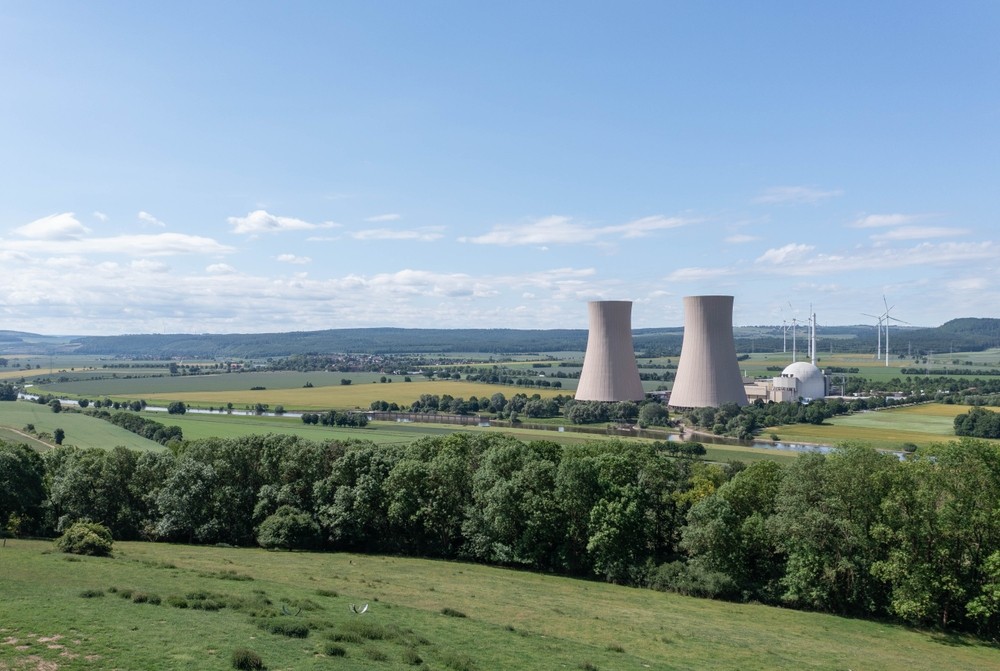
In a recent op-ed, I discussed how national security may once again be a catalyst for the development and deployment of new nuclear technology. President Trump’s new executive orders on nuclear power offer potential opportunities for Missouri to consider. Other states, such as New York, are using next-generation nuclear designs to fortify their grids in a time of growing electricity demand. Missouri should be aware of these new developments.
Below are some new directives that could be relevant to our state’s energy future.
Expediting Nuclear Construction at Federal Sites
One order calls for the deployment of advanced nuclear reactors at both military installations and Department of Energy (DOE) facilities, with timelines that call for completion of the projects near the end of President Trump’s term. To support these goals, the Secretaries of Energy and Defense are required to collaborate with the Chairman of the Council on Environmental Quality to apply existing and establish new exclusions to certain requirements from the onerous National Environmental Policy Act (NEPA).
If next-generation reactors are brought online, then this could trigger a broader wave of nuclear construction across the country, as another order requires the Nuclear Regulatory Commission (NRC) to “establish an expedited pathway to approve reactor designs that the DoD or DOE have tested and demonstrated.”
Essentially, it seems the administration is trying to lighten the load of nuclear regulation for the DoD and DOE, and if they succeed with these new reactors, then utilities and developers could follow in their footsteps.
Reevaluating Longstanding Regulation and Radiation Standards
One of the primary barriers to new nuclear development has been construction costs. Many of these costs have stemmed from the adoption of NEPA and the incident at Three-Mile Island (TMI) creating new, stringent regulations.
One study notes that for reactors already under construction when the accident at TMI occurred, median costs were almost three times higher and plants took almost twice as long to complete (not including costs of interest, delays, etc.) than plants that received their operating licenses before TMI. NEPA also had a similar, yet smaller, effect on construction costs and timelines.
To address these issues, another order calls for sweeping reform of the NRC’s operations and regulations. The Department of Government Efficiency (DOGE) is directed to help reorganize the NRC in order to better support innovation and expedite licensing.
Reform is also targeted at the longstanding radiation standards established in the 1970s. To oversimplify, these standards assume there is no safe threshold of radiation exposure, even those below levels that naturally occur in the environment. Essentially, if a nuclear developer can reasonably lower its levels of radiation exposure, it should, regardless of cost or relative risk. These policies have contributed to rising costs and a lack of predictability in both the licensing and construction process. The new executive orders direct the NRC to consider adopting a fixed and predictable exposure threshold, which should improve the environment for financial investment in nuclear.
These are just some of the key changes that are occurring in nuclear energy. If Missouri is to take part in the industry’s growing resurgence, we should be paying close attention to these developments. One way to do this is by establishing a Missouri nuclear advisory council. Such a council could bring experts together to present critical information for new development, assess emerging opportunities, and identify areas for improvement within the complex and rapidly changing nuclear landscape.
Listed are all four executive orders, each issued on May 23, 2025:
(1) Deploying Advanced Nuclear Reactor Technologies for National Security
(2) Reinvigorating the Nuclear Industrial Base
(3) Ordering the Reform of the Nuclear Regulatory Commission
(4) Reforming Nuclear Reactor Testing at the Department of Energy




