
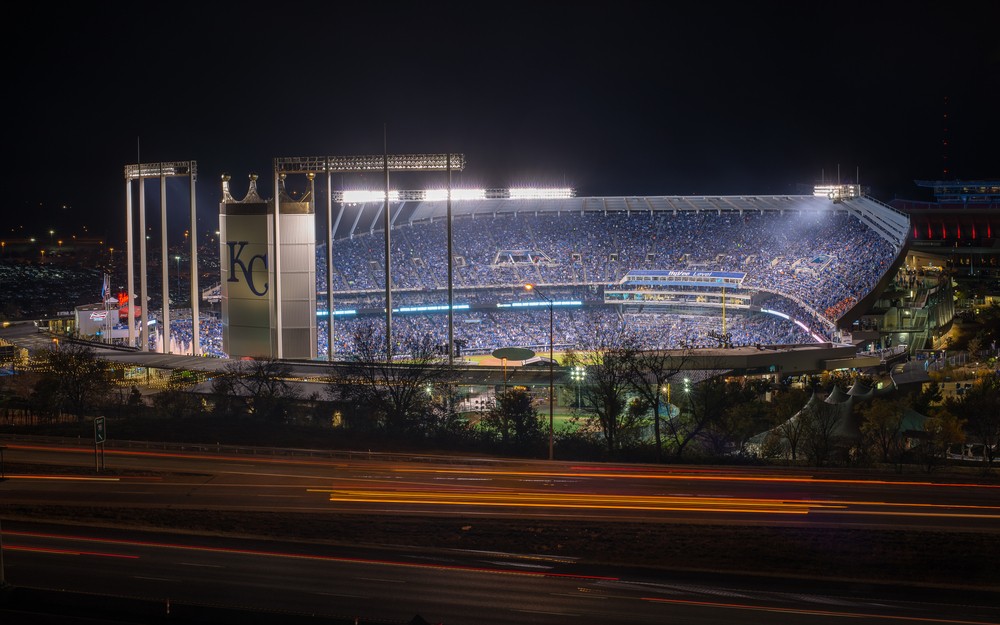
Proponents of the new stadium tax in Jackson County, which the Royals would use to build a new downtown stadium in Kansas City, made some questionable assertions at a recent panel discussion at the Kansas City Library.
I wrote previously about Mayor Sly James’s assertion that “there’s more flights all the time” from KCI Airport (there aren’t). There are three more claims that I want to address.
- James referenced a study of the 49ers’ Levi Stadium that concluded the stadium had all sorts of positive economic benefits. Unfortunately for the mayor, this study has already been debunked by journalists and economists who have reviewed it.
- James said that we’d see the community benefits agreement (a contract between developers and community organizations for a project) “tomorrow.” That was on Tuesday, March 19. What was actually produced amounts to a “press release” according to one Kansas City Star As of this writing, March 26, the Royals have still not finalized an actual agreement.
- Sarah Tourville, representing the Royals, denied responsibility for the April 2 vote: “We didn’t put it on the ballot, they [county officials] chose to put it on the ballot.” That’s misleading. Of course county legislators are the only ones who can put a measure before the voters. But recall that the Jackson County Executive initially vetoed the legislation, claiming that the county needed more time to negotiate agreements. Several legislators indicated they would support his veto. But the Royals campaign ran ads urging voters to contact their legislators and urge a veto override. Two legislators then changed their position and the veto was overridden—one of them noted the “escalating political pressure—and the measure was then placed on the April 2 ballot. The April 2 election is premature. Not only do we not have the community benefits agreement in place, we also don’t know the state and city contributions, and we also don’t have rigorous cost estimates or lease agreements. All of this information should be available for voters to make an informed decision.
What we do know is that public funds aren’t necessary for owners to build whatever they want and that stadia don’t drive economic development.




