
Should non-profits pay taxes? Well, as someone who works at a small non-profit and believes in low taxes, I am going to start off with a “No.” But I can admit the question is actually more complicated than that.
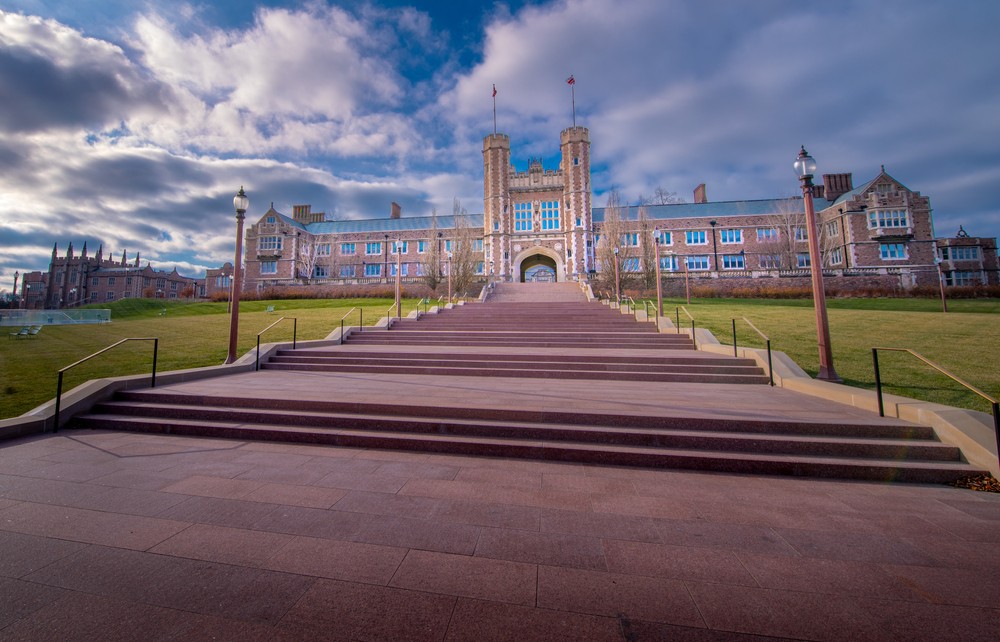
A student at Washington University recently opined in his school newspaper that the university should be paying payments-in-lieu-of-taxes (PILOTs) to the cities around the school where it owns property: University City, Clayton, and the City of St. Louis. A complicated question is what to do when Wash U buys homes or apartment buildings within those cities to house students or visiting faculty, and then those properties are removed from the tax rolls because Wash U is a non-profit. From an article in the Post-Dispatch:
To house some of those people, it has purchased many off-campus single-family homes, duplexes and apartment buildings – 11 in Clayton, 53 in the city and 121 in University City.
It also owns several commercial properties – with one of the largest being its 1991 purchase of the old Clayton Famous-Barr for $17.5 million. All those purchases have an impact: The university’s not-for-profit status removes them from the property tax rolls.
The residents in these buildings need police and fire protection, roads, and other public services. When a property is purchased by a university and comes off the tax rolls but still has residents, the cities continue providing services but no longer receive the property taxes. That puts cities in a bind, especially University City and Clayton, which depend more heavily on property taxes than the City of St. Louis. The Wash U writer documents how many other universities pay PILOTS for local services to their cities, including the second-best university in Southwest Connecticut: Yale.
You know who else has written about this issue? Me. I think larger non-profit organizations, such as Wash U, SLU, many senior citizen homes owned by non-profits, and others could be asked to make partial payments of property taxes to cities. As for the City of St. Louis, I definitely think that should be part of a trade-off for eliminating the earnings tax.
Without ending the earnings tax, I don’t think non-profits should be asked to pay PILOTs to the city. (Non-profits are also exempt from the half-percent payroll tax that for-profit companies pay to the city.) Wash U and SLU doctors, administrators, nurses, etc. pay plenty to the City of St. Louis via the earnings tax. University City and Clayton have no such alternative (nor should they). I think partial PILOTs by larger non-profits are a reasonable way to help fund local services so that the tax burden is not unfairly falling on local residents for services used by the non-profits as well.




