

Why Is This Still a Debate?

Education |
By Susan Pendergrass | Read Time 2 minutes minutes

My colleagues and friends, Mike McShane and Rick Hess, have co-authored a book on their conservative vision for public education. Getting Education Right: A Conservative Vision for Improving Early Childhood, K-12, and College has lots of smart ideas and sensible prescriptions for how to better educate our children.

But one takeaway for me, as someone who has been in the field of education reform for decades, is that we need to stop apologizing and giving up ground because our work happens outside of the circled wagons of the education establishment. The fact is that partnering with parents instead of hiding things from them, giving parents access to the childcare setting of their choice instead of creating universal, government-managed pre-K programs, and letting parents decide where each of their children will attend school aren’t really reforms—they’re just common sense. And most people agree.

Take school choice, for example. It’s no longer a radical idea that must be wrangled with and heavily negotiated by state legislatures. Public opinion surveys repeatedly find that very few people are opposed to the idea, regardless of the type of program.
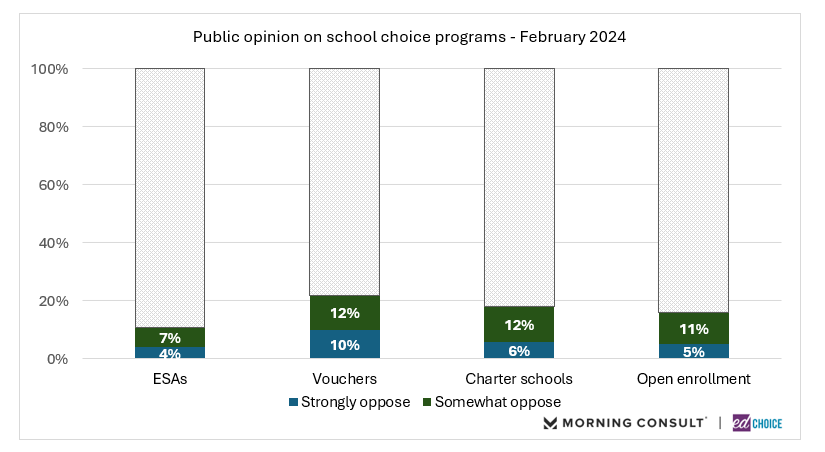
Teachers unions may have loud voices and large platforms, but that doesn’t mean that we have to set common sense aside. The idea that parents can be trusted should no longer be up for debate.


About the Author

Before joining the Show-Me Institute, Susan Pendergrass was Vice President of Research and Evaluation for the National Alliance for Public Charter Schools, where she oversaw data collection and analysis and carried out a rigorous research program. Susan earned a Bachelor of Science degree in Business, with a concentration in Finance, at the University of Colorado in 1983. She earned her Masters in Business Administration at George Washington University, with a concentration in Finance (1992) and a doctorate in public policy from George Mason University, with a concentration in social policy (2002). Susan began researching charter schools with her dissertation on the competitive effects of Massachusetts charter schools. Since then, she has conducted numerous studies on the fiscal impact of school choice legislation. Susan has also taught quantitative methods courses at the Paul H. Nitze School for Advanced International Studies, at Johns Hopkins University, and at the School of Public Policy at George Mason University. Prior to coming to the National Alliance, Susan was a senior policy advisor at the U.S. Department of Education during the Bush administration and a senior research scientist at the National Center for Education Statistics during the Obama administration.

Similar Stories

Support Us

Headline to go here about the good with supporting us.

Donate
Man on Horse Charging


